

Software Asset Management
Our implementation methodology allows you to realize the business benefits & value of Software Asset Management such as maintain licence compliance, optimize the usage of software licences, defend against software audits as well as improved governance & enforcement.
Our SMEs are experts in scoping the discovery sources and use suitable technical approach to extract the software licence data. We are well versed with using the ServiceNow SAM Pro Publisher Packs for known vendors such as Microsoft, IBM, SAP, Oracle.
We leverage the ITSM knowledge and ensure tight integration with Request Fulfilment, Incident Management, Configuration Management, Procurement Management, Contract Management etc.

Our Approach
ServiceNow’s Software Asset Management is aimed at reducing IT costs and limit operational, financial, and legal risks related to software ownership. Implementation approach of SAM Pro should consider Process, People and Tool aspects to ensure the benefits of implementation. Below high-level approach will be followed for implementation of SAM (this aligns to Now Create Methodology).
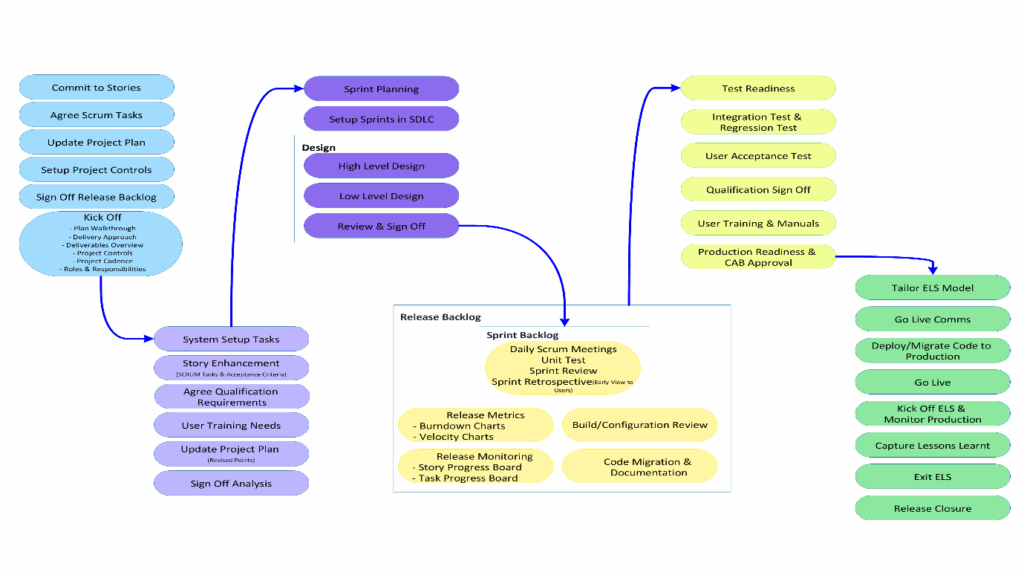
Objective of the SAM implementation is to maintain licence compliance, optimize licencing through reuse & harvesting, single portal for acquisition of software licenses and installation and improved governance and enforcement.
Implementation will be focused on following and will be delivered in a phased manner:
- SAM Pro Core Setup – Configure Platform
- Requesting Software – Implement Processes to request software from Request/Change Management
- Governance – Identify SAM education, process and reporting requirements
- Entitlements – Create entitlement records
- Software Models – Identify publishers, products and versions
- Software Procurement – link POs to software entitlement
- Contract Management – Create Contracts for software licences & maintenance
- Optimization – establish reclamation rules for unused/blacklists/unlicensed software licences
- Normalization – Discover and software licences
- Reconciliation/Remediation – implement reconciliation process
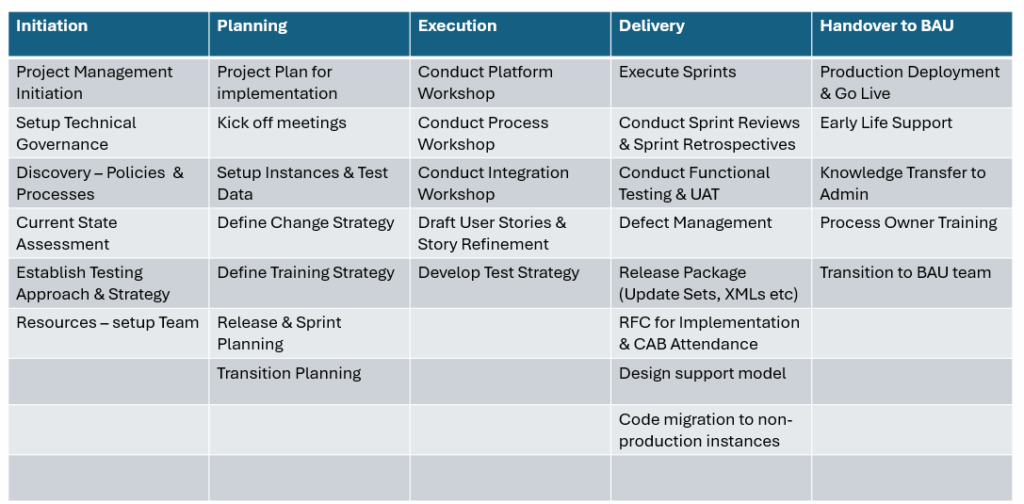
Typical high level plan for implementation is as follows:


Tailored Process Guides
User Stories & Product Backlog
HLD & LLDs (for Integrations)
Update Sets & Deployment Files
Test Strategy
Change Enablement Plan
User Training & Training Materials
Participate in the workshops & input on the Process design & Functional requirements.
Provide access to systems needing integration.
Cyber & Information Security review of the design.
Availability of the Process Owner, Process Analyst & other cross-functional teams.